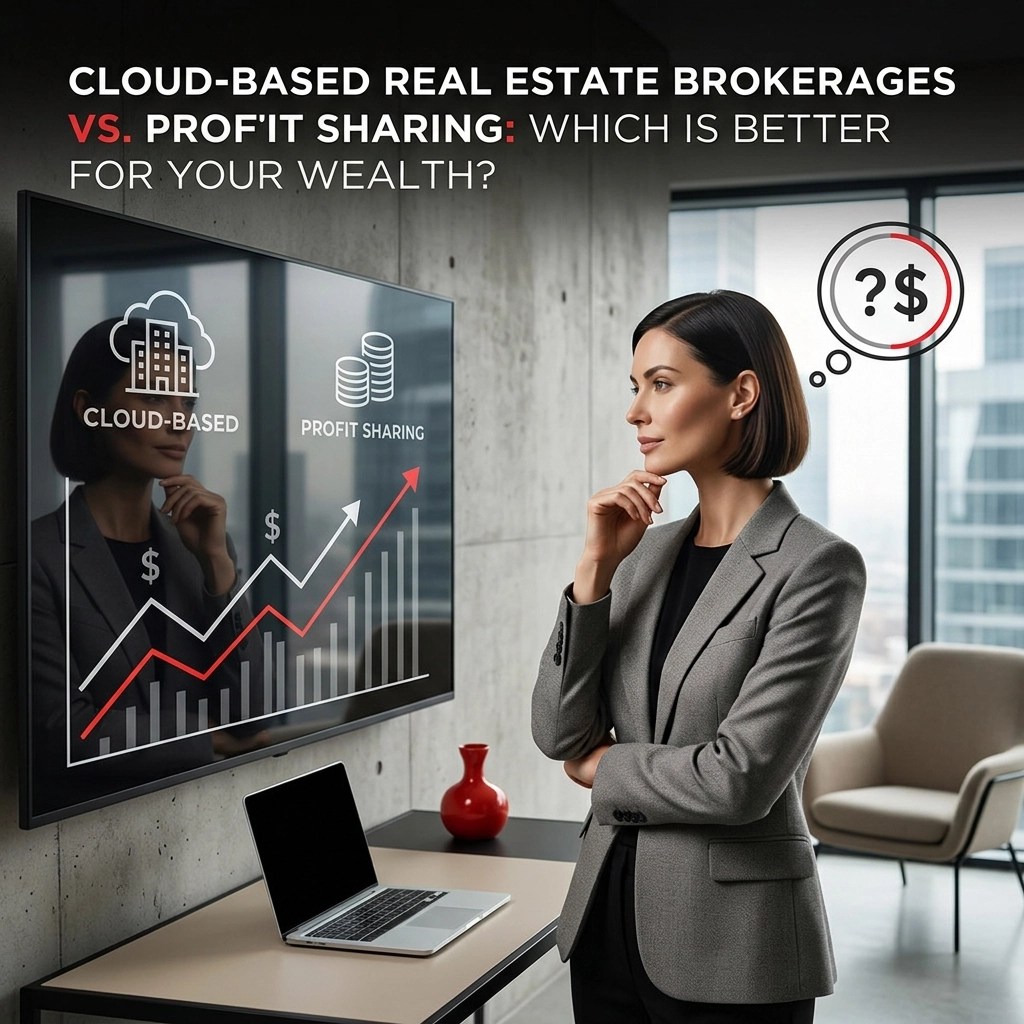
Stop chasing the next commission check. If you are reading this, you are likely an ambitious agent who has realized that selling houses is a job, but building a real estate business is a legacy. The industry is currently divided into two primary camps: the low-overhead, cloud-based models and the culture-driven, profit-sharing powerhouses like Keller Williams Realty Integrity Lakes.
The question isn’t just about who gives you a higher split today. The real question is: Which model actually builds long-term wealth that survives market shifts?
Let’s be honest. Many agents are lured by the siren song of “cloud-based” efficiency. They see the 85/15 splits and the lower caps and think they’ve found the shortcut to the top. But wealth isn’t built on what you keep from a single transaction; it’s built on the systems, the people, and the passive income streams you cultivate over decades.
Shift Your Mindset From Agent To CEO
You cannot afford to view yourself as a salesperson anymore. Start thinking like a CEO. A CEO doesn’t just look at the top-line revenue; they look at the bottom-line profit and the sustainability of the organization.
The entrepreneurial calling in real estate is about more than just “freedom of schedule.” It’s about creating a financial fortress. Whether you are looking at a cloud-based revenue share model or the Keller Williams profit-sharing system, you must evaluate these through the lens of risk, scalability, and culture.

Analyze The Cloud-Based Revenue Sharing Model
Cloud-based brokerages, such as eXp or Real Broker, operate without physical brick-and-mortar offices. By stripping away rent, utilities, and local staff, they return a portion of the “top-line” revenue to the agents who help grow the company.
- The Split Advantage: Many cloud models offer an 85% split with a $12,000 to $16,000 cap. This is undeniably attractive for solo agents who are tech-savvy and don’t feel they need a physical office.
- Revenue Sharing: Agents receive a percentage of the gross commission generated by the agents they recruit. This money comes off the top, before the company covers its own expenses.
- Equity and Stocks: These firms often grant Restricted Stock Units (RSUs) for hitting production milestones.
The Truth You Must Face: While “off the top” sounds great, revenue sharing models are inherently “me-centric.” If the company isn’t profitable because its overhead is too thin or its growth stalls, those stock units can become volatile or worthless. Furthermore, when you remove the physical office, you remove the spontaneous collaboration that often leads to the biggest deals of an agent’s career.
Why Profit Sharing Is The Stakeholder’s Choice
At Keller Williams Realty Integrity Lakes, we don’t just share revenue; we share profit. This is a fundamental shift in philosophy. Profit sharing means that once the Market Center pays its bills and treats its staff well, the remaining profit is split roughly 50/50 between the owners and the agents who helped the office grow.
- Build a Partnership, Not Just a Downline: When you are in a profit-sharing model, you are a stakeholder. You care if the office is profitable. You care if the other agents are productive. This creates a “we-centric” environment.
- The Power of Passive Income: KW has paid out over $1.5 billion in profit share since its inception. This is money that flows to you regardless of whether you personally closed a deal that month.
- Legacy Wealth: Unlike some revenue share programs that may have complex vesting schedules or expire if you leave the industry, KW profit share is willable. You are building an asset that can support your family for generations.
I challenge you to ask yourself: Would you rather have a small piece of a huge, profitable pie, or a larger piece of a pie that might not even be in the oven yet?
The Math Of Wealth: Top-Line vs. Bottom-Line
Let’s look at the concrete data. A cloud-based agent might see a higher percentage of a $10,000 commission check. They might keep $8,500 instead of $7,000.
However, consider these hidden costs of the cloud:
- Lead Generation Costs: Without a physical brand presence and local “walk-in” credibility, cloud agents often spend 20-30% more on digital leads and online branding.
- Mentorship Gaps: Research shows that agents in collaborative, physical environments have a 15% higher retention rate and reach “capper” status faster than those working in isolation.
- Technology Fees: While “low cap” sounds good, many cloud firms nickel-and-dime agents with per-transaction fees, insurance fees, and software subscriptions that add up to thousands annually.
Stop focusing on the split and start focusing on the net. If a physical office and a culture of production help you do five more deals a year, the “higher split” at a cloud brokerage becomes a mathematical trap.

Don’t Succeed Alone: The Culture Factor
Real estate is a lonely business if you let it be. Cloud brokerages try to solve this with avatars and virtual worlds, but nothing replaces the energy of a high-production office.

- Focus on Collaboration: At Keller Williams Realty Integrity Lakes, we believe that no one succeeds alone. Our profit-share model reinforces this. When I help you get better, my office becomes more profitable, and we both win.
- Access World-Class Training: Wealth isn’t just about the money in your bank; it’s about the knowledge in your head. Utilize our weekly coaching call resources to stay ahead of the 2026 market shifts.
- Leverage Local Leadership: Having a Vice President of Operations and a dedicated leadership team means you have people in the trenches with you, not just a help-desk ticket in a virtual world.
It’s Time To Decide Your Future
These are not the years to waste money. The market is evolving, and the “disruptors” are being tested.
If you are a high-producing agent or an aspiring team leader, you have to decide what kind of wealth you want to build. Do you want the “quick hit” of a slightly higher commission split, or do you want to be part of an ecosystem designed to build multimillionaires through profit sharing and shared ownership?
Take these steps immediately:
- Run a P&L Statement: Analyze your last 12 months. How much did you spend on leads because you didn’t have a local office presence?
- Evaluate Your “Passive” Income: If you stopped selling today, how much would your current brokerage pay you next month? If the answer is $0, you don’t have a business; you have a job.
- Research the Numbers: Look at the actual profit-share payouts in the Twin Cities market versus the stock volatility of cloud-based firms.
- Connect with us: If you are ready to see how a stakeholder model can change your life, it’s time to Join KW Lakes.
The reality is this: Cloud-based brokerages are a technology play. Keller Williams is a people play. In a world of increasing AI and automation, the agents who own the local relationships and the local profits are the ones who will thrive.
Stop settling for a 70/30 split without a plan for your future. Build something that lasts. Build a legacy.
Ready to dive deeper into the strategies that build real wealth? Check out our Real Talk Blog for more insider insights.
 Lakes Coaching
Leave a comment